ABLE Accounts
Monkey is doing a fantastic job at her new job (Blog post on that soon.), and as good parents, we're also attempting to plan for whatever the future holds. She wants to support herself as much as possible, and also recognizes we all need different sorts of help. Because of the various opportunities New York offers, many of which have to be paid by Medicaid, she is on Medicaid as her secondary insurance. With that in mind, we've been trying to learn how we can help her save and plan with her money, while also being aware of government limits.
Did you know that for folks with disabilities who receive SSI support (Supplemental Security Income), they are not allowed to hold over $2000 in their own name? That amount has not changed since 1989! Two thousand dollars wasn't much then, and it really isn't much now. This keeps folks trapped in an endless loop of needing more money to survive, but not being able to gather more resources for fear of losing their necessary benefits. This doesn't impact our family right now, but I know people that it does impact.
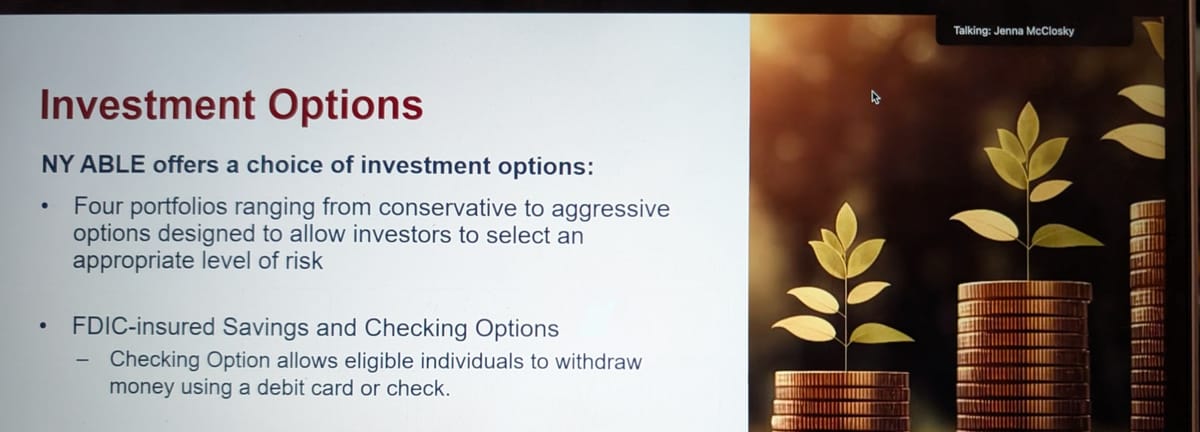
Thanks to Monkey's research, she found out about ABLE Accounts and last night Buds and I took a Zoom seminar to learn about how these accounts can be used by folks with disabilities and what it means for their independence and dignity. I'm writing this post not because any of you need it, but you probably know someone who could use the information. I'd never heard of it, Jenny hadn't either, and we're both pretty savvy in supporting our kiddos who need it and seeking information. I'm betting lots of people who could use it don't know this option exists.
A little history from the ABLE National Resource Center:
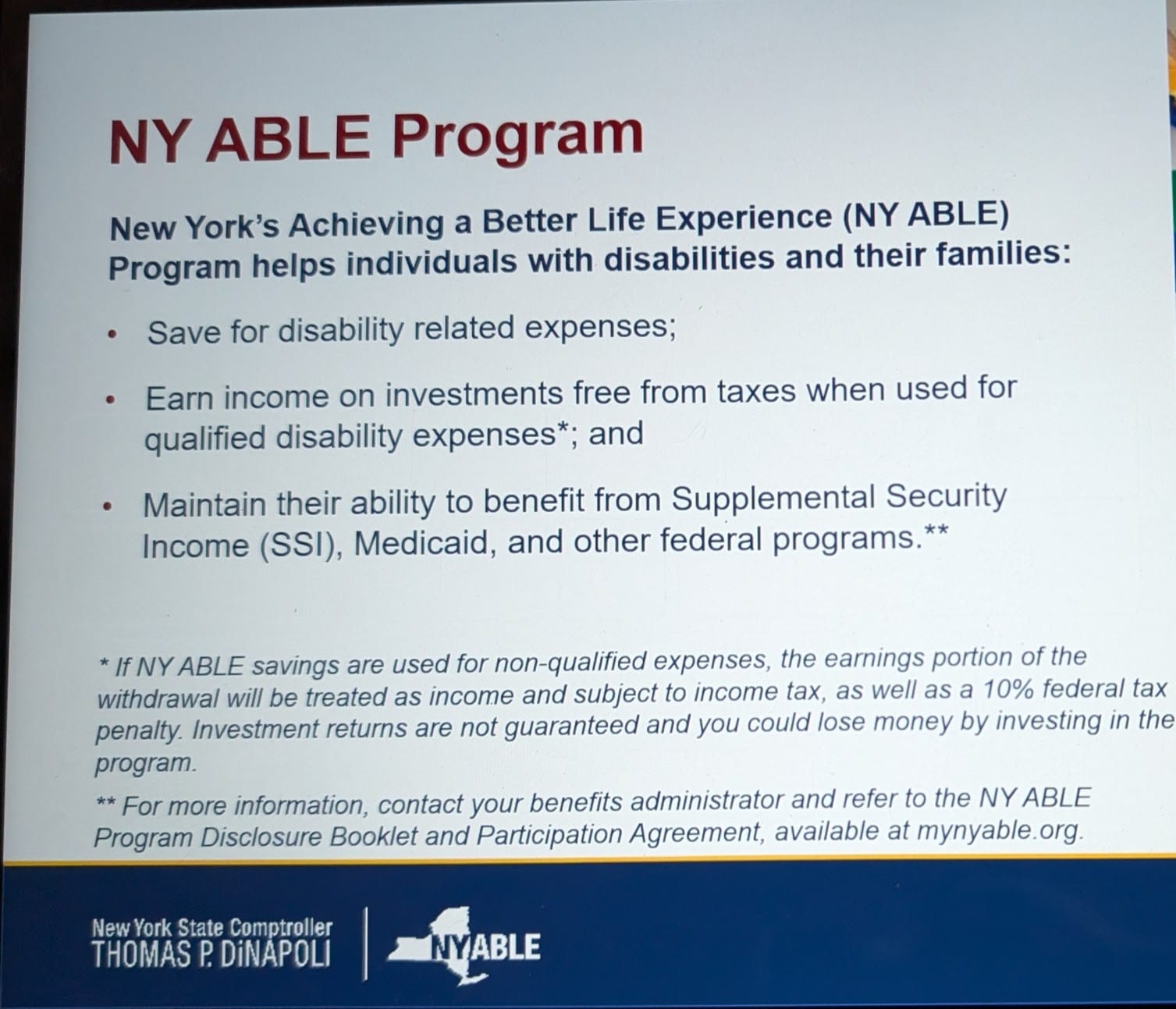
"The ABLE (Achieving a Better Life Experience) Act was signed into law on December 19, 2014 as part of the Tax Increase Prevention Act of 2014, amended Section 529 of the Internal Revenue Service Code of 1986. The ABLE Act created tax-free savings accounts for individuals with disabilities to pay for qualified disability-related expenses (including education, housing and transportation). The law made it possible, for the first time, for people with disabilities to save and pay for extra costs associated with living with a disability and to enhance their financial health, independence and quality of life."
Barack Obama was the president when this passed, but more importantly, this was bi-partisan legislation. Members of both parties worked to create this fantastic opportunity. Let's have more of that!
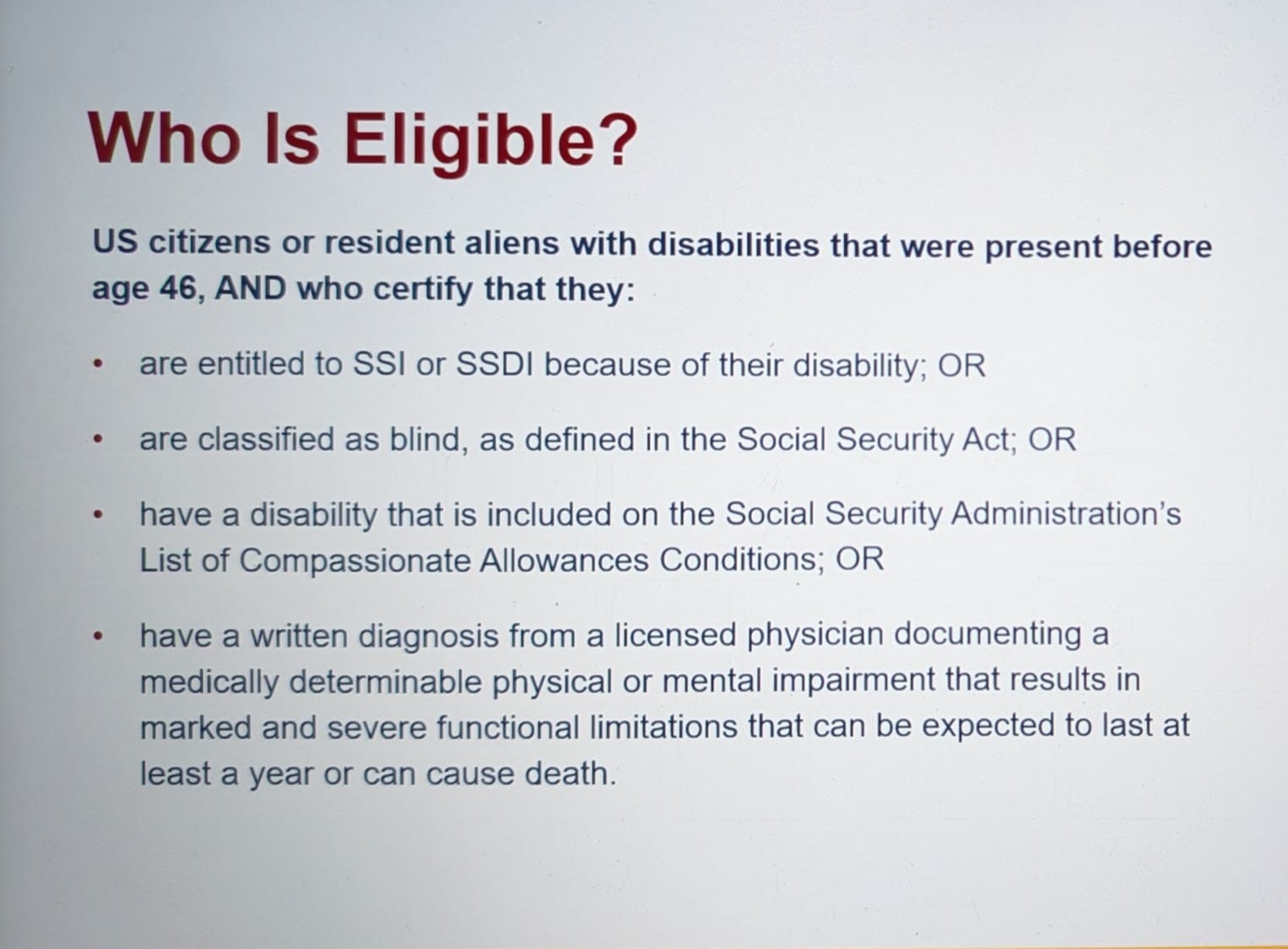
Though the ABLE accounts have been around since 2015, some changes were implemented at the beginning of this year; an impressive one to me was that prior to this year, the account holder's disability had to have happened before they were 26 years old. Now the age limit is 46 years old. As the presenter pointed out last night, this means several million more people will qualify, many of whom are veterans. That seems like great expansion.
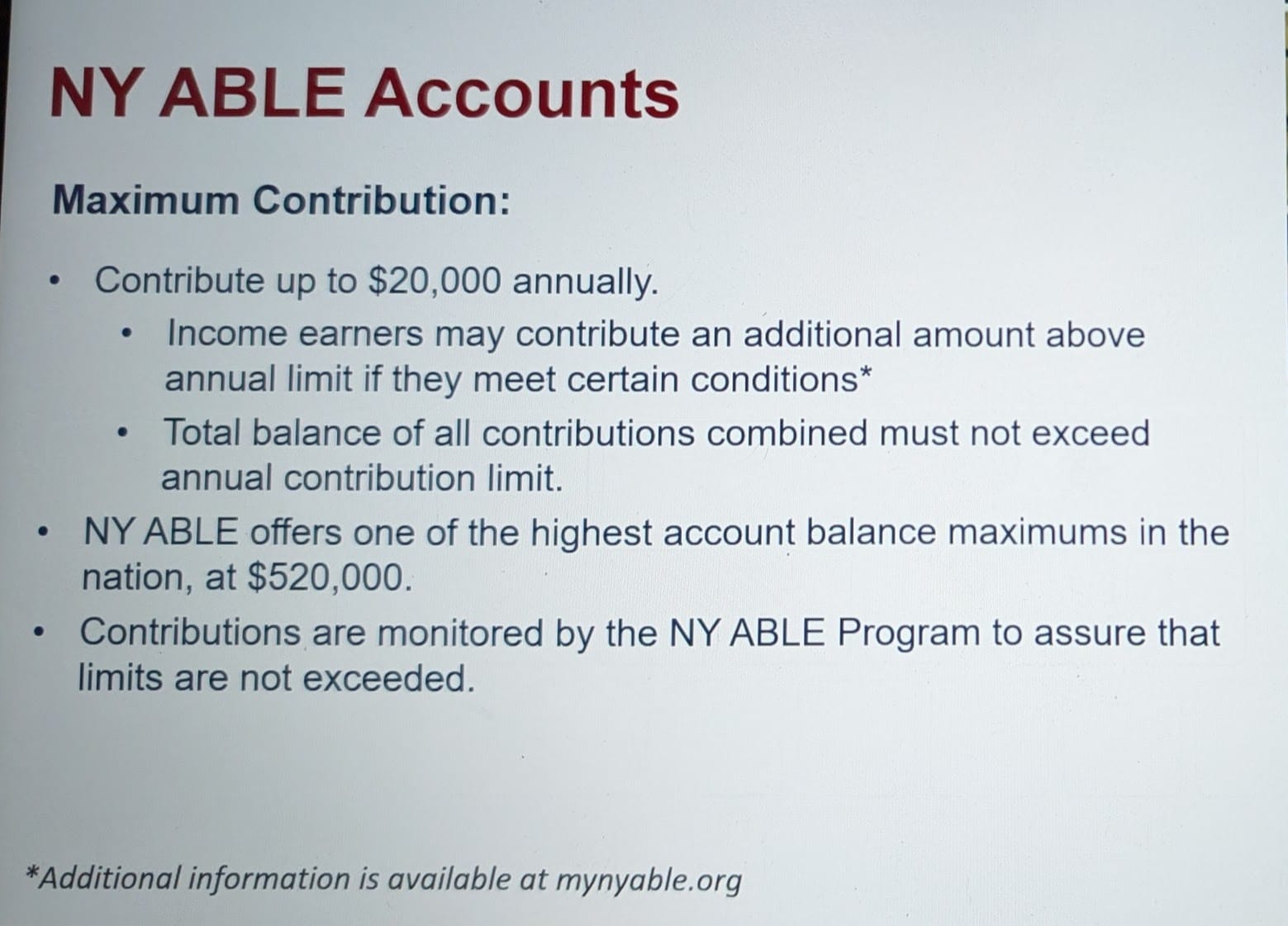
The program limits are expansive. People can contribute $20,000/year, more if you are employed, and you can have up to $520,000 in the account. The upper limit can vary by state, but people can enroll in other state's programs to get the best fit for their needs.
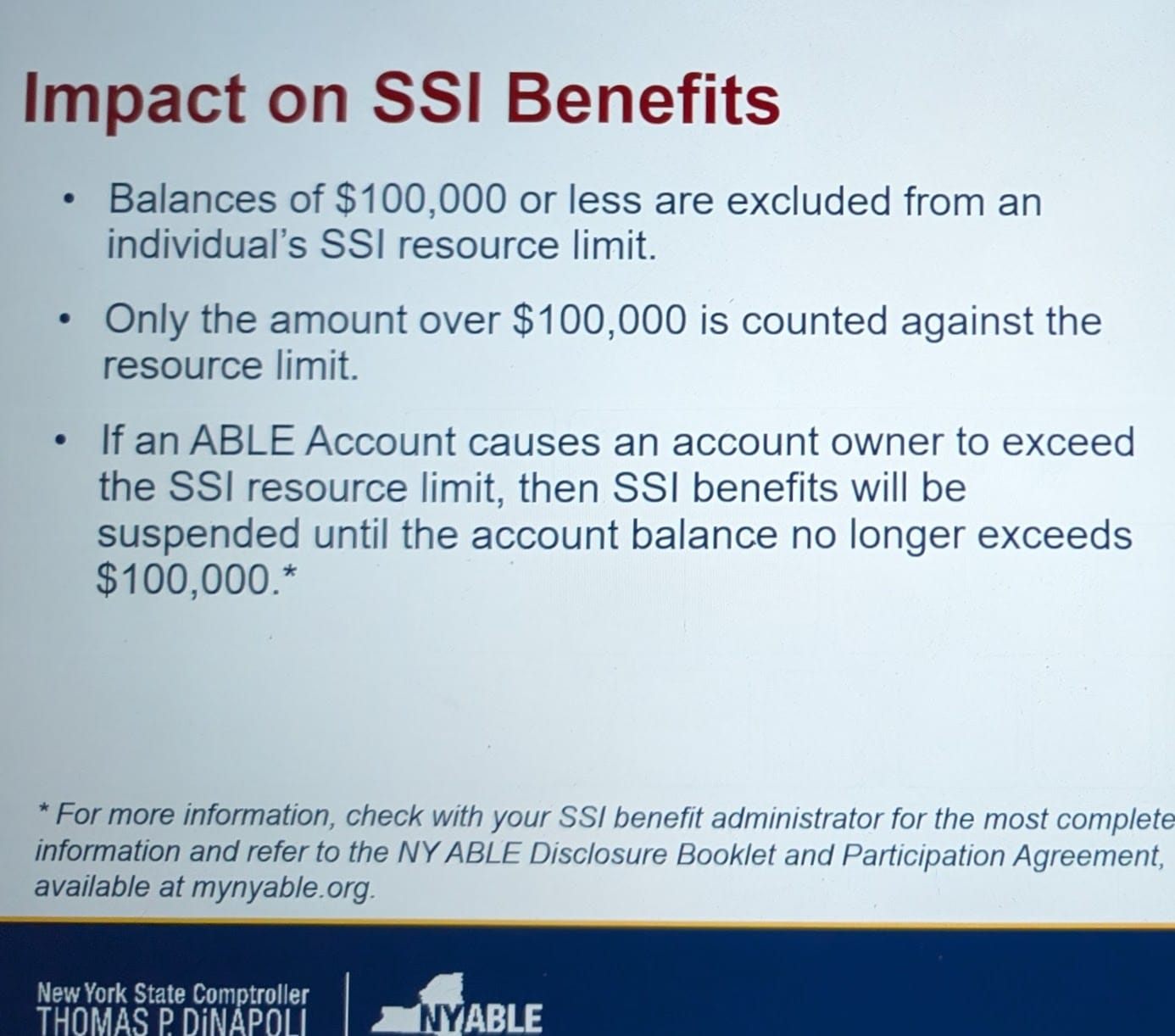
For folks who do receive SSI benefits, the limits are different.
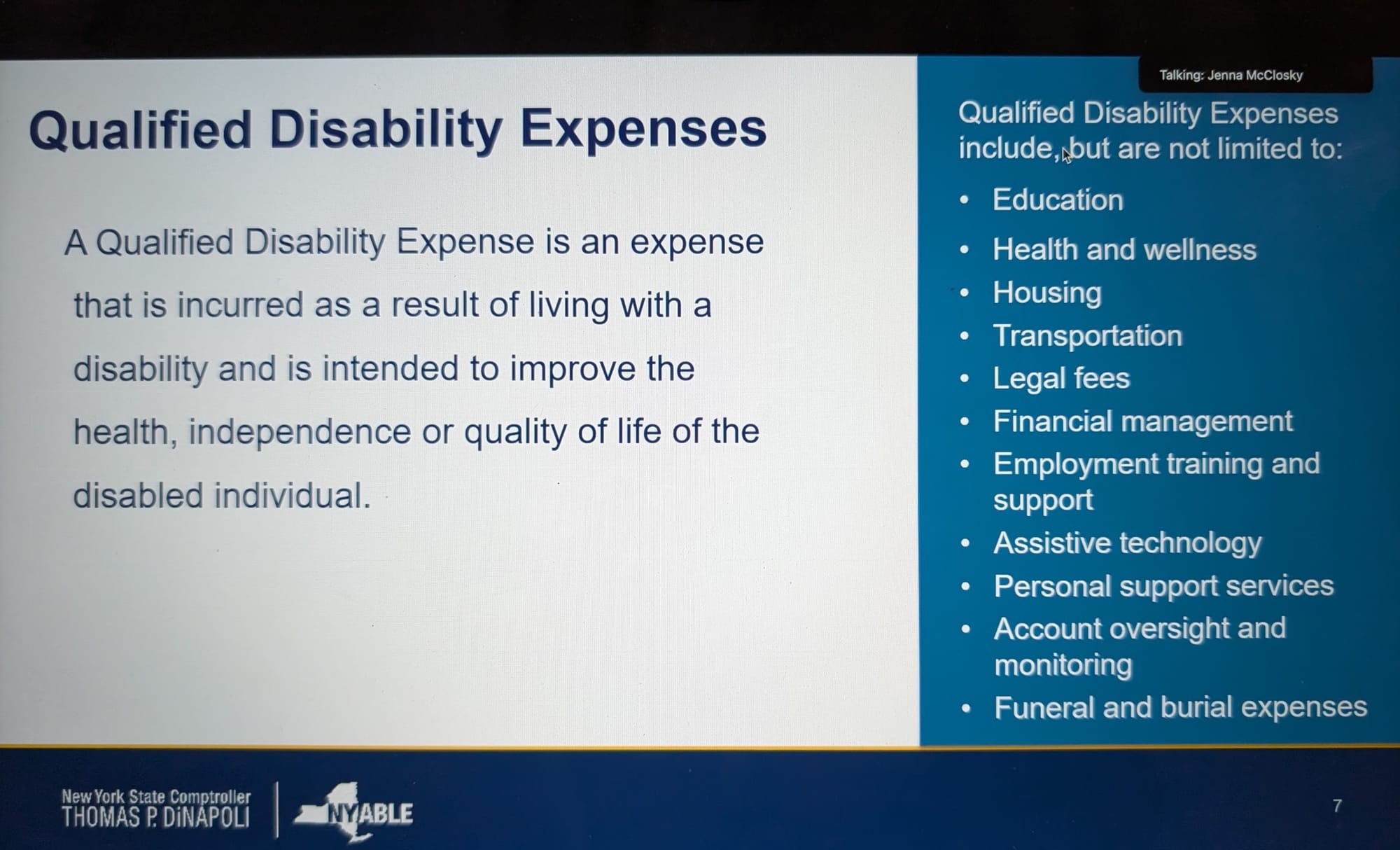
We were thrilled to learn the qualified expense list is also expansive and covers items all of us need, not just specialty medical equipment or adaptive devices.
The other mind-blowing piece is that the money invested grows tax-free. It's the best of many investment accounts all rolled into one; except for the upper cap, which is still a great deal of money.
You might think this will never apply to you. You might not need this knowledge ever, but I have learned all of us will someday deal with a disability. Short-term, long-term, mobility related, mental health; there are many reasons people need to have extra support. The ABLE account is one way of removing some of the stigma around government financial aid and the unnecessary barriers people with disabilities live with around a monetary cushion. Buds and I want to be around for a very, very long time, but knowing we are most likely mortal, we want to plan for ways to care for all three children in the best way we can once we are gone. The ABLE plan is a way specifically to help Monkey have what she needs in the future.